The Comb Cases
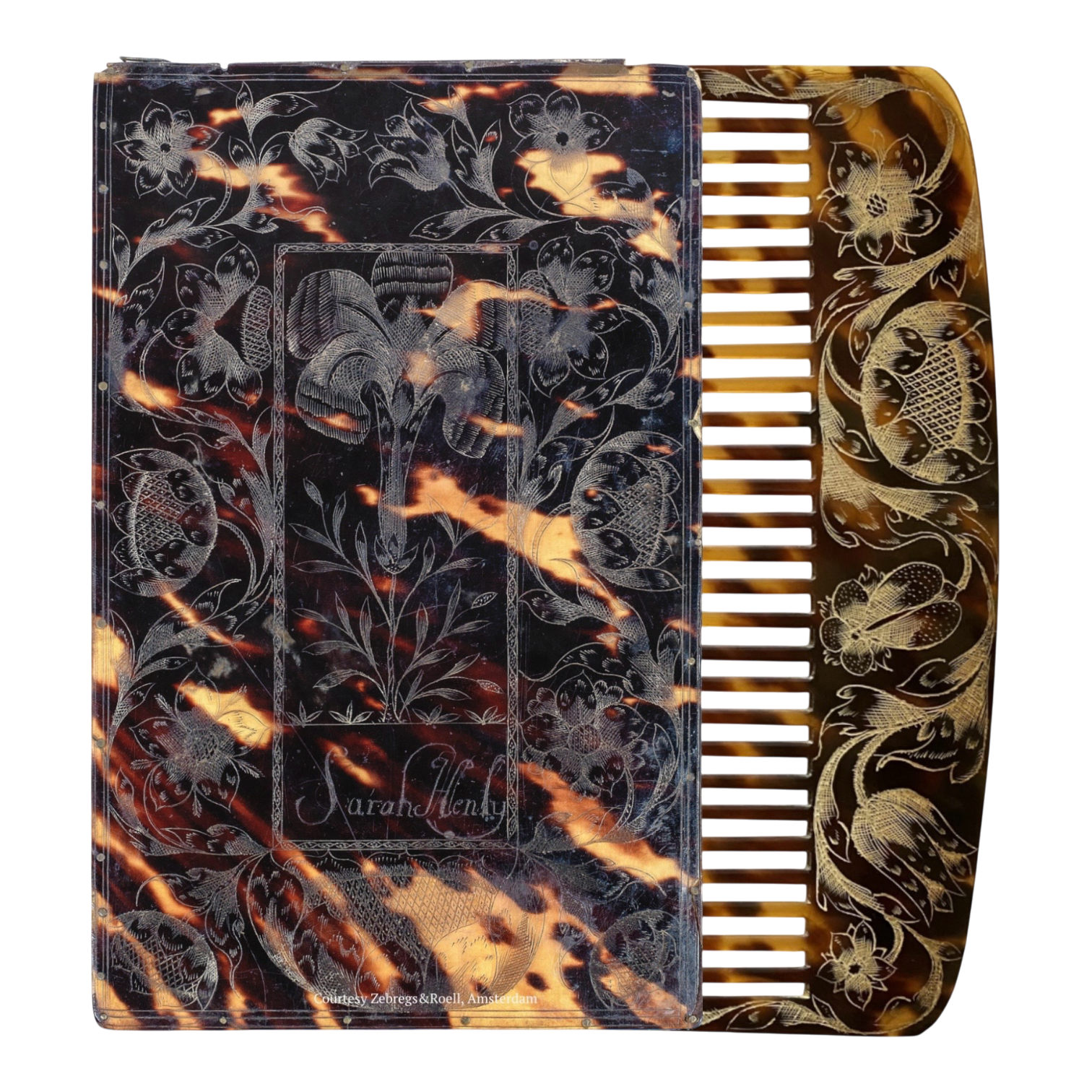
Of all of the surviving Jamaican engraved objects from Port Royal, the sixty comb cases are the most numerous. It has been by referencing the development of the imagery and designs on the cases throughout the period that we are now able to date undated items.
THE FIRST PERIOD 1670-1686
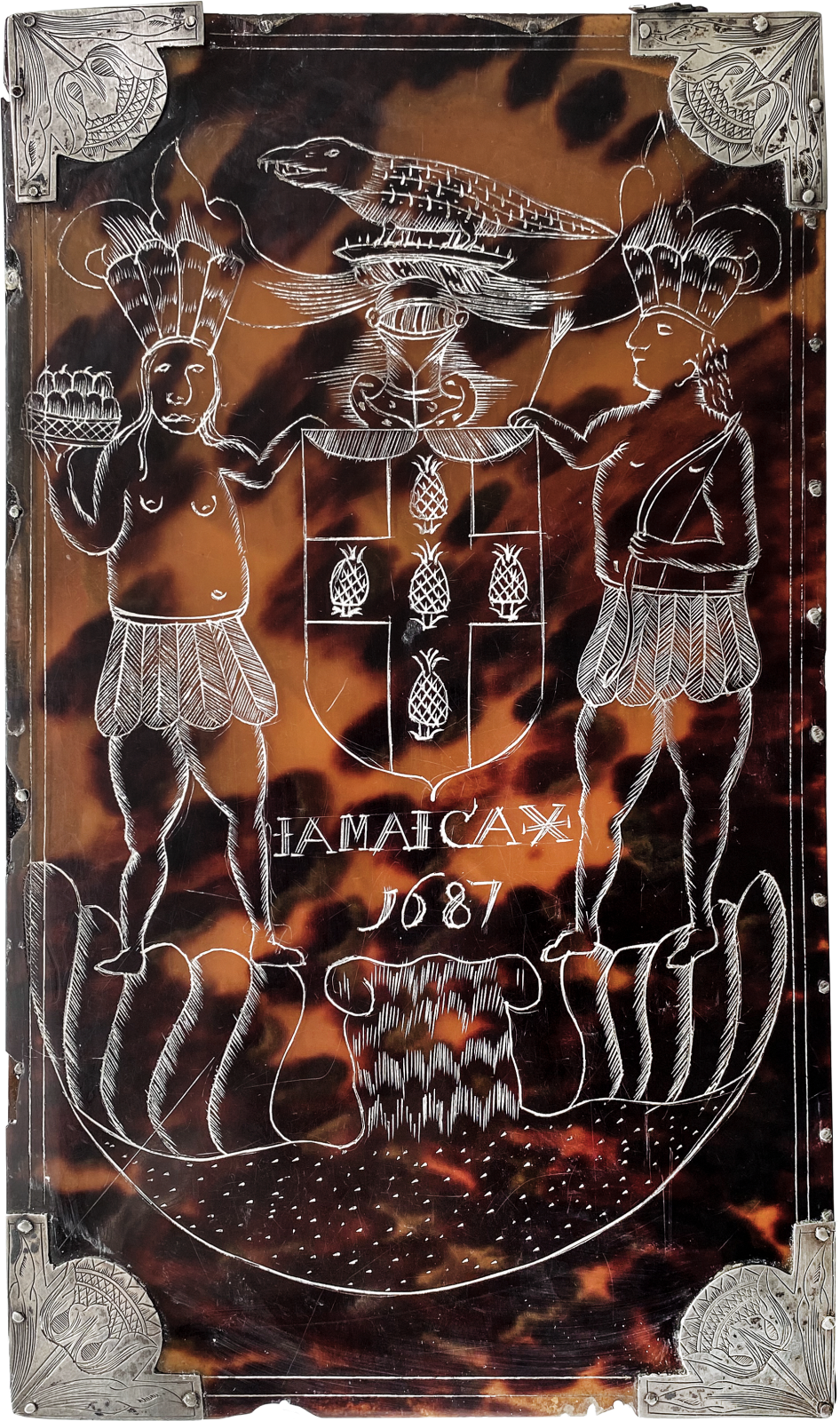
The earliest cases from this period carry recognisable European style engraving and motifs, seen in this personalised 1670 example shown here. They were probably destined as gifts or tributes to influential friends and officials in England. In 1672 we see for the first time this European style combined with a symbol of the Jamaican landscape; a fruiting palm tree. From 1673 the Jamaican coat of arms was included in the increasing repertoire of Jamaican imagery.
It is believed most of these First Period cases were commissioned pieces and design choices could be made in a ‘mix and match’ fashion, sometimes mixing the earlier European style with Jamaican imagery, resulting in a delightfully naive and recognisable style.
‘Two large turtle shell combs in a case of the same, of no value but might be of some interest’
Henry Morgan, 1676, when Lieutenant Governor of Jamaica, to Sir William Coventry. Coventry Papers, Vol.75, folio 234.
Courtesy private collection USA
INTERREGNUM PERIOD 1686 - EARLY 1688
We do not know what befell the engraver’s workshop in 1686, but it would appear that no one was available who could begin to approach the skill of the first engraver(s).
SECOND PERIOD 1688 - 1692
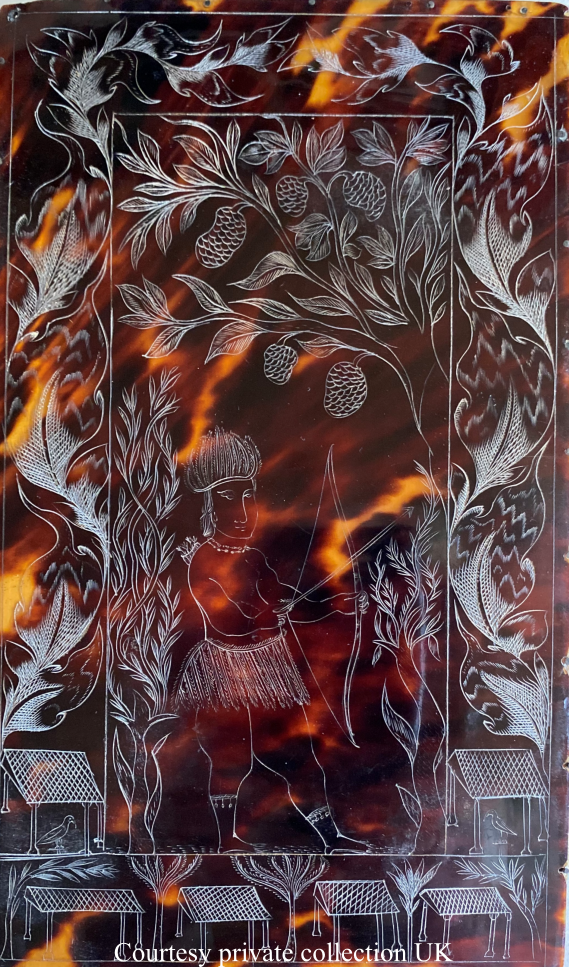
Production carried on in the second period, but of a far simpler design to that seen pre-1686, probably for ease of replication. There are two charming cases engraved with a cashew tree in 1688 but thereafter the design moved towards a rigid pattern. There is little variation in design across this short period.
Courtesy private collection, UK
Courtesy The Bryan Collection, USA