Invasion
-
Workforce
-
Merchants and Trade
-
Planters and Slavery
-
Life at Sea
-
Death and Disease
-
Fashion
-
Pirates and Privateers
-
Food and Drink
-
Earthquake and Devastation
-
Invasion - Workforce - Merchants and Trade - Planters and Slavery - Life at Sea - Death and Disease - Fashion - Pirates and Privateers - Food and Drink - Earthquake and Devastation -
Life in Jamaica
This section of the book looks primarily at the social life of the first English colonists on the island of Jamaica, much of it unsavoury, and is illustrated with contemporary commentaries, some quoted here.
‘Not only did the earth tremble, and in some parts open beneath the feet of the terror-stricken inhabitants, but the horrors of the event were intensified by the mysterious awful sounds that one moment appeared to be in the air, and then in the ground .. In places the earth opened, swallowing up many hapless creatures.’ William James Gardner, History of Jamaica, 1873, chapter 1.
‘The merchants and gentrey live here to the hights of splendor, in full ease and plenty, being sumptuously arrayed and attended...’ ‘..yett ‘tis infected with such a crue of vile strumpets and common prostratures, that ‘tis allmost impossible to civilize it since they are only its walkeing plauge...’
‘Likewise here the Royall Company of Merchants and African Company have settled a factory here, and bring aboundance of Negroa slaves hither daily...’ Jamaica in 1687, The Taylor Manuscript, ed. D Buisseret, pp 238,240,241.
Courtesy British Museum
‘The Spaniards wondered much at the sickness of our people, until they knew of the strength of their drinks, but then they wondered more that they were not all dead...’ Governor Modyford quoted by Cundall, The Governors of Jamaica, pp131-139.
‘Also in the eavenings many young sparks and the common sort resort to musick houses to devert themselves, for the port indeed is verey lose in itself, and by reson of privateres and debauched wild blades which come hither … 'tis now more rude and antique than'ere was Sodom, fill'd with all maner of debauchery…’ John Taylor Manuscript, Jamaica in 1687, ed David Buisseret, p240.
‘The manner of living there sufficiently demonstrates the flourishing condition of the Island, ….. being seated in the midst of the Spaniards, so that we drain the benefits of their Gold and Silver mines without their labour and expenses.’ Terry Breverton, Nautical Curiosities, p260
‘ ... but it is very natural to suppose, that the lust of unlimited power, inherent to mankind, will always ravage most licentiously in those sequestered places, ... Men, entrusted with public offices so far from the Mother-state, require a chain, instead of a thread, to hold them within bounds.’ Edward Long, History of Jamaica, 1774, Vol 1, p3.
‘The wickedest city in the world,’ ... ‘The Dunghill of the Universe, the Refuse of the whole Creation ... The Nursery of Heavens Judgements ... The Receptacle of Vagabonds, the Sanctuary of Bankrupts, the Close-stool for the Purges of our Prisons, as Hot as Hell, and as wicked as the Devil.’ A Trip to the West Indies, Ned Ward, London, 1698 pp5-7.
But opinions differ: ‘More than any other early English settlement in America, this flashy port town breathed a frontier spirit of adventure and bravado. Port Royal was a sailors' dive, but much more besides. It was a handsome, wealthy, and surprisingly cosmopolitan place, altogether a colourful little city.’ Dunn Sugar & Slaves, p178
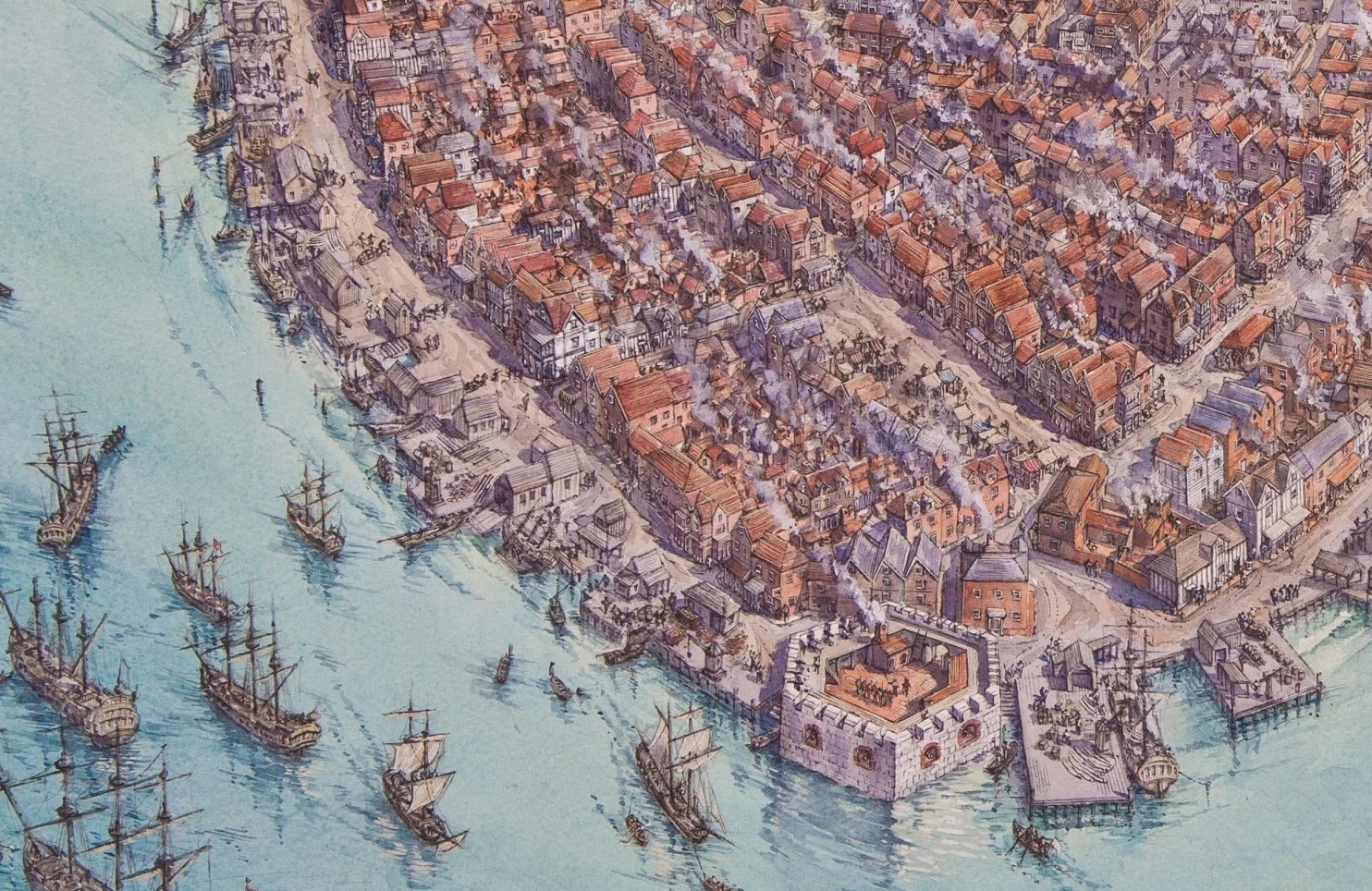
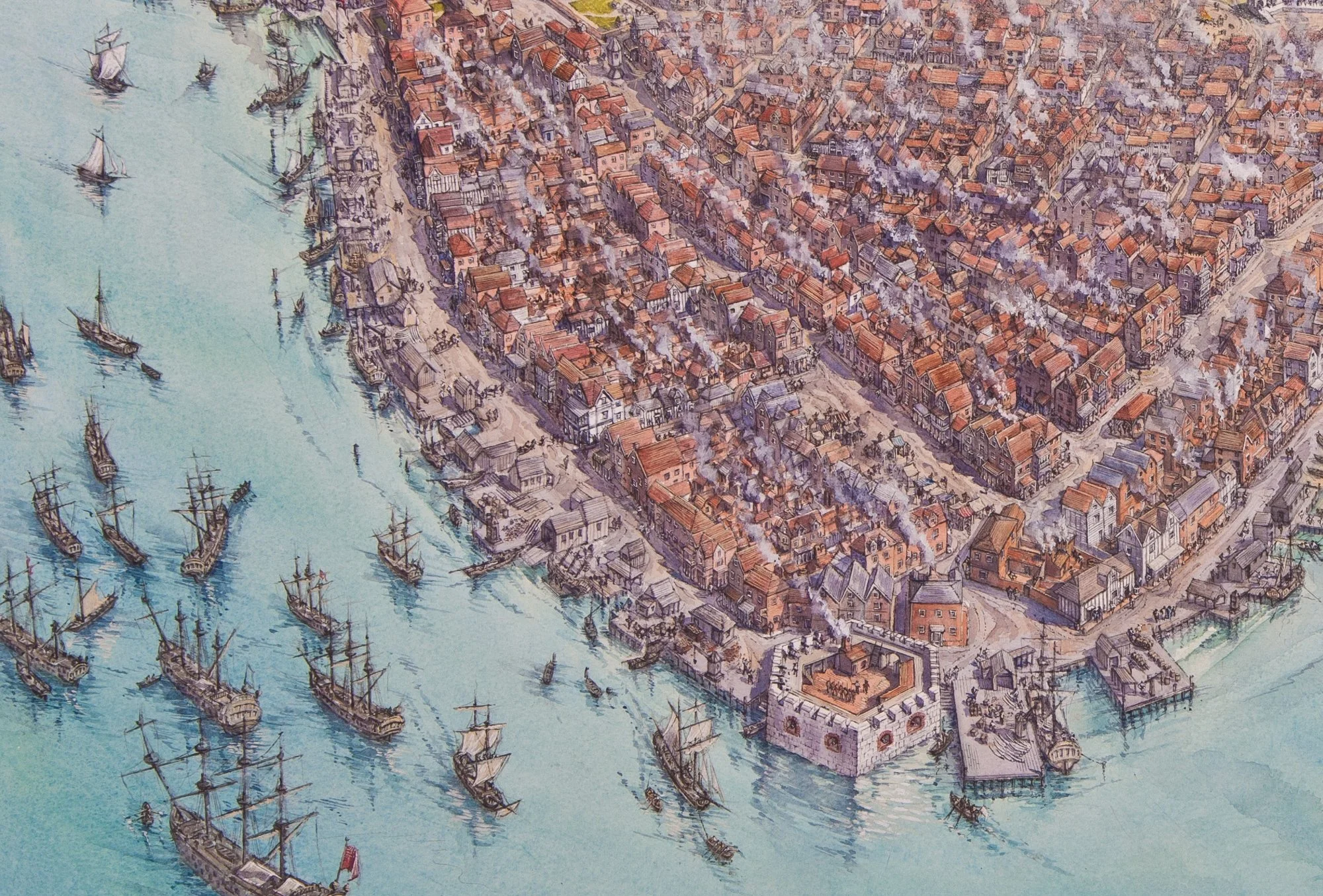
Background: Visual Reconstruction of Port Royal before the Earthquake. Image courtesy Peter Dunn